Give a new client question a clear home
An agency client asks how its brand appears in AI answers. The account team needs a way to investigate, explain what it finds, and agree on work that falls within its control. LLMVisibility.com could name a dedicated practice that handles those questions with a defined engagement and a visible set of deliverables.
The natural audience would be businesses already investing in search, content, or communications. Their agency may understand the customer journey and have access to subject experts, website editors, and reporting systems. A focused desk could connect those existing relationships around the practical task of reviewing answer presence.
This concept describes a possible business for a future owner. No agency service is offered through this website. The distinction matters because a useful concept should show the shape of an engagement without implying that a team, client roster, or delivery operation already exists behind it.
Begin with a discovery brief
A first engagement could start with the client’s ideal customer, the problem that customer is trying to solve, and the questions that arise along the buying journey. The agency would gather product descriptions, known objections, important comparison pages, and examples of inaccurate information that the client has already encountered.
That material would become a written brief. The brief would specify which brands, markets, languages, and answer surfaces are in scope. It would also identify the people who can approve factual corrections. A product marketer may own feature descriptions, while a technical specialist owns claims about security or compatibility.
The agency should agree on the purpose of the exercise before collecting observations. A client seeking factual accuracy needs a different report from a client exploring how buyers discover alternatives. A narrow brief makes it possible to judge whether the work answered the client’s original question.
Package the work around tangible deliverables
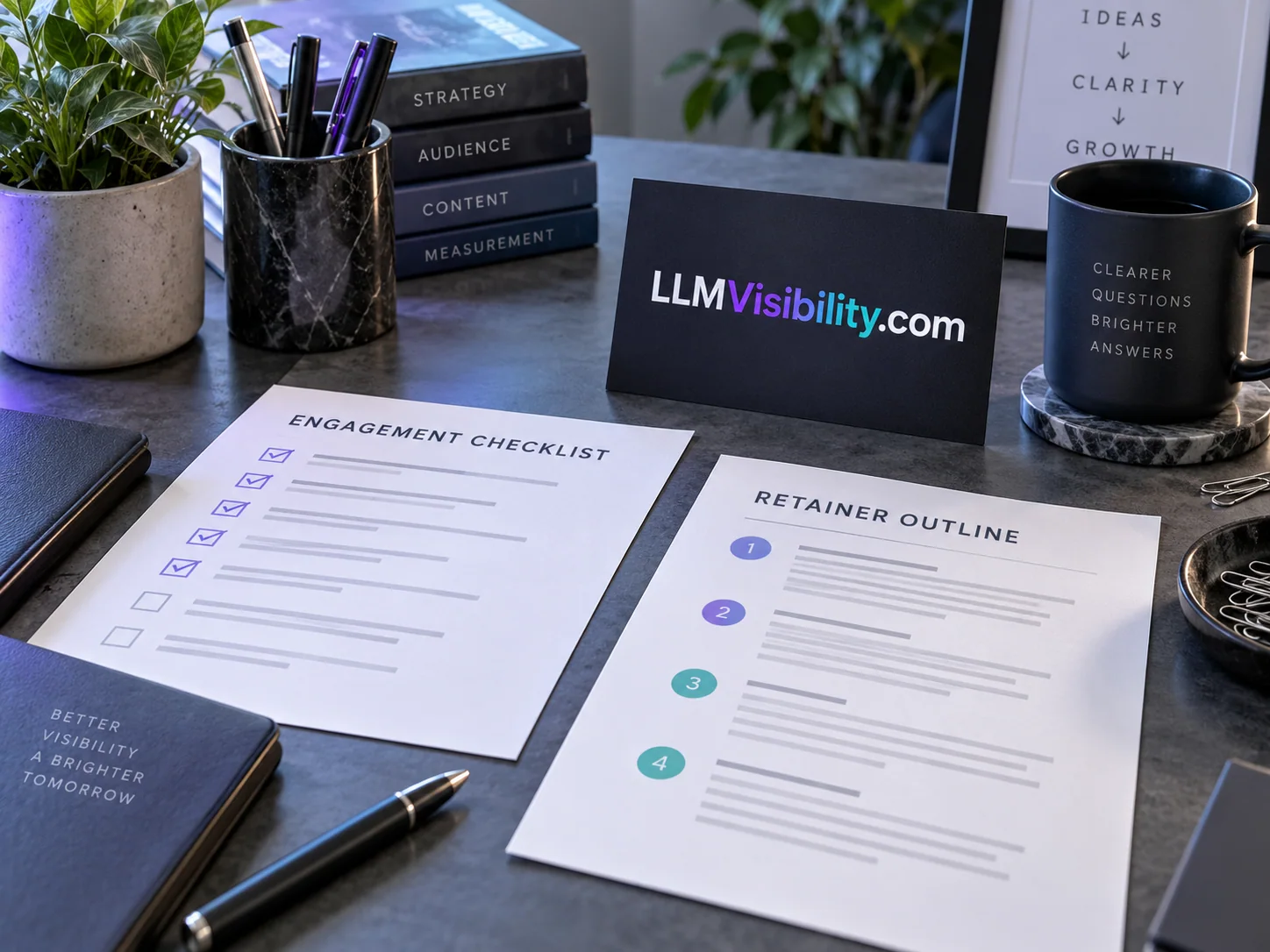
An initial audit could produce an approved question set, an evidence register, a source review, and a prioritized action plan. Each observation in the register would include enough context for the client to inspect it. Each proposed action would identify an owner, a reason, and the information needed to complete it.
The source review would look at the pages that appear in the collected answers. It could note outdated facts, confusing entity names, weak descriptions of a product’s scope, or useful material that is difficult to locate. The action plan would connect those findings to specific editorial or technical tasks.
For example, a client might discover that its old company name appears in an answer because a widely referenced profile has never been updated. The agency could document the mismatch, identify the appropriate correction route, and help the client prepare accurate replacement information. The deliverable would be the completed correction work and the evidence of what changed.
Keep a retainer tied to a review rhythm
A continuing engagement could follow a monthly cycle of observation, review, implementation, and reporting. Its scope would state the number of markets or question groups covered, the depth of human review, and the amount of editorial support included. These are illustrative service boundaries, not published packages or commercial terms.
The review meeting should focus on decisions. Which inaccuracies matter enough to address now? Which questions reveal a gap in existing explanatory material? Which apparent changes need more observations before anyone interprets them? A short decision log would help the next review begin with the previous month’s reasoning intact.
The agency would also need a route for urgent issues. A clearly false statement about a product may require a factual response outside the normal reporting cycle. That response should be handled according to the client’s approval process, with the agency distinguishing verified facts from assumptions about why an answer appeared.
Show the client what the evidence can support
A report should name the question set, collection period, surfaces, and known gaps. If the agency expands the sample, it should explain how that affects comparisons. A result based on a handful of observations should remain visibly connected to that sample.
The agency could report completed work alongside observed answer changes, keeping the two measures distinct. Updating a documentation page is an action the team can verify. A later change in a generated answer is an observation with several possible causes. Placing both on a timeline can help the client investigate without claiming that timing proves causation.
This reporting style gives account managers a practical way to discuss uncertainty. They can show what the team did, what was observed afterward, and what remains unresolved. Clients can then decide whether the next cycle should broaden the investigation or concentrate on a particular content problem.
Give the practice a name that explains its subject
LLMVisibility.com could serve as the main identity of a specialist firm or as a distinct public destination for an established agency’s dedicated practice. A descriptive line beneath the name would explain the target customer and the engagement, such as “AI-answer audits and content review for B2B teams.”
The category name offers room for research, training, and reporting as the practice develops. The agency would still need its own evidence of expertise, clear responsibilities, and a service model that clients can evaluate. The domain can make the subject recognizable while the delivery earns confidence over time.
For a useful acquisition conversation, bring the intended client profile, the first engagement outline, and the capabilities already available in the team. Compare the monitoring product concept if software may become part of the business. Then inquire about LLMVisibility.com with the direction that best fits the plan.